Name of the Video Game: Untitled Game
Developer: Jodi
Year of Released: 2006
Mode of Distribution: Online and CD-Rom
Original Game: The Quake
A. What is video game?
A video game includes computer games, home console videogames, online games and most forms of computerized play that involve a monitor and an input device. The role of computerized toys is not considered as a video game in this article.
B. What is an Art?
It is hard to give a clear definition of art. Therefore, in my article, the definition of art is based on Ernest W. Adams’ article: ‘Will Computer Games Ever Be a Legitimate Art For?’
According to Adams, there are six characteristics of art that are:
1. Art has content
2. Art has an aesthetic
3. Art contains idea
4. Art makes you feel things
5. Art is not formulaic
6. Utility and saleability
Adams also stated that being an art is not required to fulfill all these characteristics as mentioned. However, if it does none of them, it has a greater chance of not being an art.
C. The Original Game: the Quake
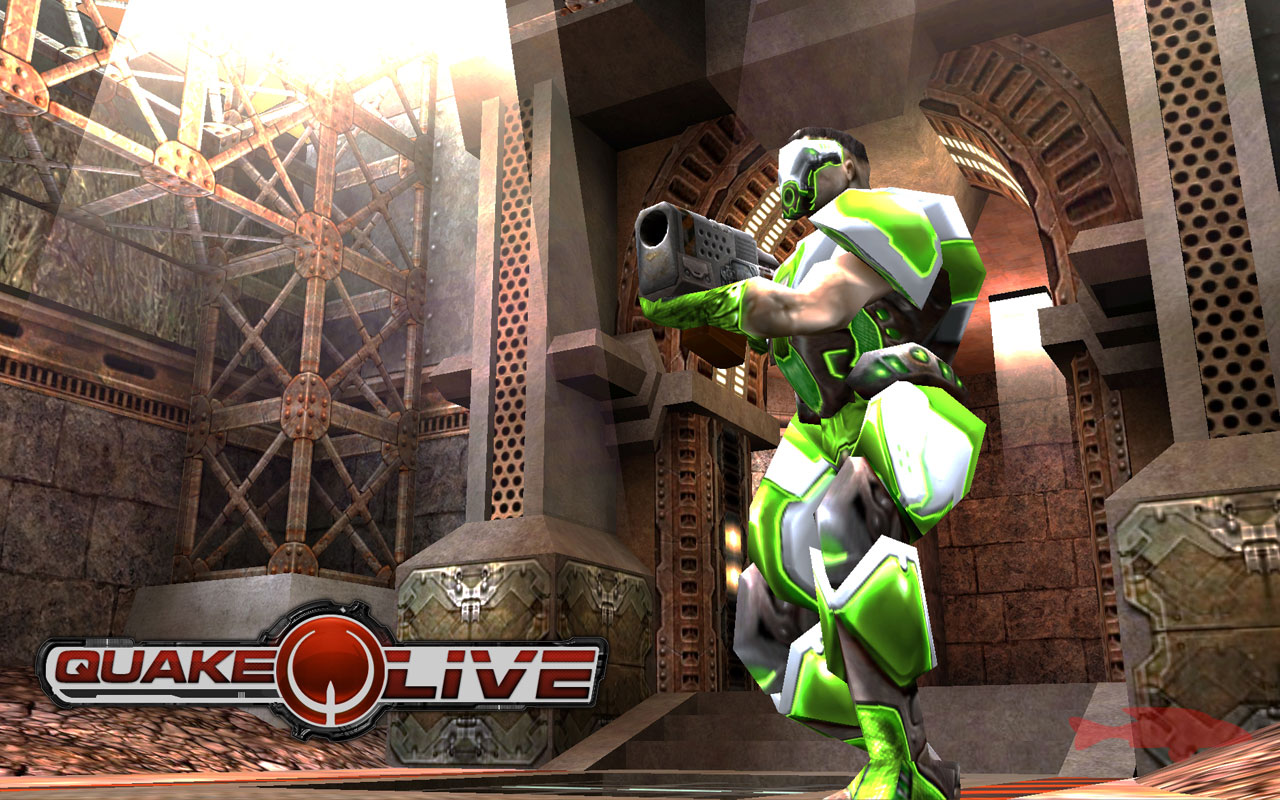
Untitled Game is an art game created by Jodi. Jodi modified old video game which is called Quake. Untitled Game is an art game which is designed in such a way as to emphasize art or whose structure is intended to produce some kind of reaction in its audience. [1] Before talking about the Untitled Game, I would to introduce the Quake first. The Quake is a first-person shooter video game. It is a typical video game which has a narrative and it is very figurative. It is so figurative to have some dramatic impact on the audience such as there are some vivid and lively monster with a lot of fire and shooting beasts. So it is very explicit graphically.
D. Description of the Untitled Game
There are 14 versions of the game. Basically, Jodi's mods deconstruct the game and its virtual space, creating glitchy, abstract, and often disorienting visuals, as well as removing the heads-up display. Each mod hacks or glitches the game in a different way. In named 'Ctrl-9' version, for instance, the player is in a large cube, with moving black and white patterns all along the inside surface. This patter is the result of a glitch "generated live as the Quake engine tries, and fails, to visualize the interior of a cube with black-and-white checked wallpaper”.
E. Reasons of Being an Art
1. Art has an Aesthetic
In the Untitled Game, the 14 versions of work are focused on different aspects such as compositions, lines, primary colors, balance, geometry, angles, space and shapes. These aspects have shown that the qualities of these aesthetic elements convey meaning directly without the use of words or pictorial representation which is similar to an abstract art. Although it is difficult to judge whether it is beauty or not, it is appeal to the audience to a certain extend.


2. Art Contains Ideas
Art must have the capacity to express ideas. However, Jodi erases the story and the figurative site of the game. Jodi replaces those figures with some very basic form like just a line or a square, just black and white, and attaches these forms to the behavior of the code so that we would have a better view on how such a game is driven, what are the dynamics of the game. Their mods reduced the complex graphics of Quake to the bare minimum, aiming for maximum contrast between the complex soundscapes and the minimal visual environment. The pattern is the result of a glitch in the game engine discovered by the artists. This modification also prompted the idea that the whole trick of the Quake is highly depended on the perspective engines. These kinds of games are only an architectural illusions and the 3-D space is only a graphical tricks. Obviously, this approach is not only for entertainment or enjoyment, but also contains an idea which challenges the gamers.


3. Art is Not Formulaic
Another important characteristic of good art is that it is not formulaic. There are 14 versions of the piece created by Jodi. The 14 versions of work are focused on different aspects such as digits, lines, primary colors, pixels, geometry, angles, space and shapes. Each of these games is just like a ‘new’ game. In terms of visual element, it seems that there is no connection between these 14 versions. Also, we may not consider these 14 games are actually based on the same video game. The only common feature of Untitled Game is the method of playing the game that is just using the arrow keys to navigate, and the 'enter' key to shoot. So, when it is compared with the Quake, the Quake is relatively formulaic. The Quake has 3 versions, however, these 3 versions are so similar to each other. Only some new weapons and enemies are included. It is just like an ‘upgrade’ of the previous one and is not innovative. Although the Quake has some elements of being an art, it is not as good as Jodi’s Untitled Game when they are compared together.


4. Utility and Saleability
Art should not involve the consideration of utility. It is not about being useful. Moreover, it outweighs the consideration of saleability. Art should not involve the merchandizing. Since Untitled Game is uploaded on the internet and allows the user free to download. It obviously implied that Untitled Game is not a game that aims at people buying it. It is not about saleability or turning into a commodity. On the other hand, the Quake is thus a video game involving merchandizing and concerns about its saleability. The quake is comparatively commercial and lower chance of being an art.
Bibliography:
[1] Sneidberg, Scott (2010-08-31). "Who says video games aren't art?". CNN. http://www.cnn.com/2010/TECH/gaming.gadgets/08/31/video.games.art.steinberg/. Retrieved 2010-11-20
[2] Ernest W. Adams’ article: ‘Will Computer Games Ever Be a Legitimate Art For?’
